New Delhi
08048046662
+919818085534

Items tagged with 'pirani vacuum gauge calibration india'

68179d65be22ee500d53ff54 Card 2

product image
VACUUM GAUGES

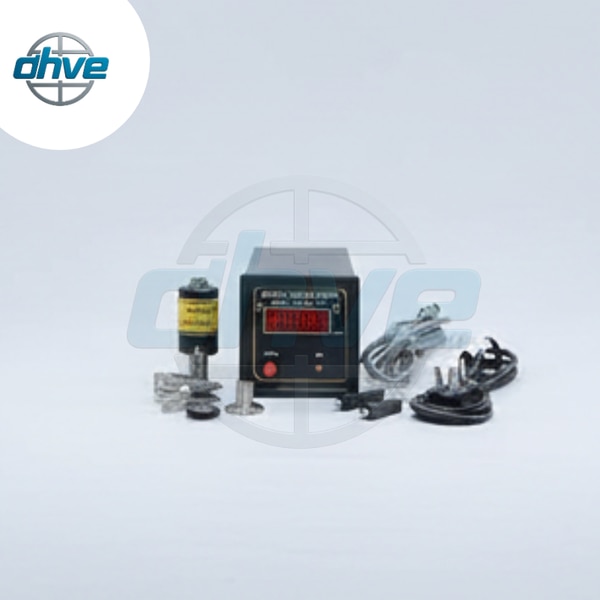
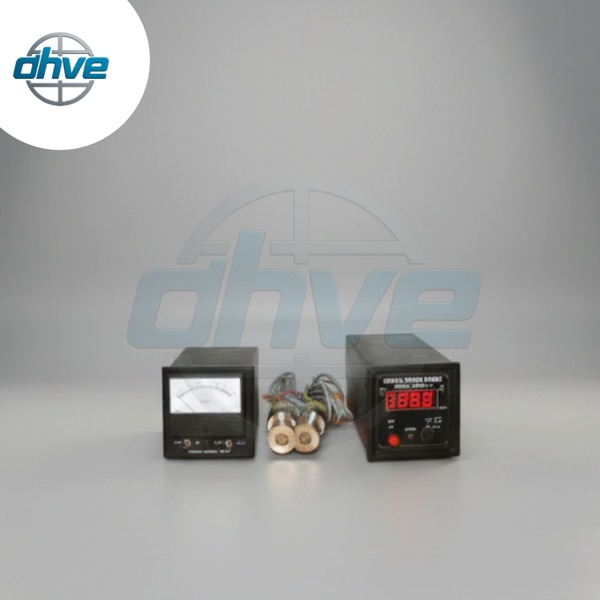
For accurate measurement of pressure in the rough to high vacuum range 10^{-3} to 10^1 mbar), the Pirani Gauge is an industry standard. This thermal conductivity gauge provides reliable, cost-effective, and robust pressure monitoring, making it indispensable for controlling vacuum processes and protecting high vacuum equipment. Dinesh High Vacuum Engineering (DHVE) supplies a versatile range of Pirani Gauges, offering both the simplicity and durability of Analog units and the high precision and integration features of Digital sensors, ensuring you have the right monitoring tool for every application. I. ⚙️ The Pirani Principle: Measuring Pressure via Thermal Conductivity The Pirani Gauge operates based on the principle that the thermal conductivity of gas changes proportionally with its pressure in the rough to medium vacuum range. How It Works Heated Filament: A fine metal filament (often made of platinum or tungsten) is suspended within a sensor cell exposed to the vacuum environment. Constant Heating: An electrical current is passed through the filament, heating it to a temperature significantly higher than the ambient temperature. Heat Loss: Heat is lost from the filament primarily through two mechanisms: Radiation: This heat loss to the chamber walls is relatively constant. Thermal Conduction: This heat loss to the surrounding gas molecules is pressure dependent. Pressure Measurement: As the pressure decreases (i.e., the vacuum improves), fewer gas molecules are present to carry heat away from the filament. This causes the filament's temperature to increase, which, in turn, causes its electrical resistance to increase. The gauge circuitry measures this change in resistance and converts it into a pressure reading. Note: Pirani gauges are gas-type dependent. The reading is accurate for the calibration gas (usually Nitrogen or Air). If measuring other gases (e.g., Helium, Argon), conversion factors must be applied, as each gas has a unique thermal conductivity. II. 📊 The Legacy: Analog Pirani Gauges (DHVE Classic Series) Analog Pirani Gauges are known for their simplicity, reliability, and cost-effectiveness. They utilize basic bridge circuitry and rely on a physical meter movement to display the pressure. They are often chosen for applications where a simple, quick visual confirmation of vacuum status is required. Key Features of DHVE Analog Pirani Gauges: Simple, Durable Operation: They are highly reliable with minimal complex electronics, making them durable for continuous industrial use. Visual Indication: The needle movement on the meter provides an intuitive, quick check of vacuum status (e.g., 'Good Vacuum' or 'Rough Vacuum'). Cost Efficiency: They offer the most economical entry point for accurate measurement in the 10^{-3} mbar range. Output: They typically provide a basic electrical output (often a 0-10V signal) proportional to the pressure, easily integrated with older control systems or simple relays. III. 💻 The Future: Digital Pirani Gauges (DHVE Smart Sensors) Digital Pirani Gauges integrate microcontrollers and sophisticated signal conditioning directly into the sensor head, offering greater precision, stability, and connectivity than their analog counterparts. They are essential for automated and data-intensive modern vacuum systems. Key Features of DHVE Digital Pirani Gauges: Enhanced Accuracy and Stability: Digital linearization and precise temperature compensation circuitry provide a highly stable and accurate reading across the entire measuring range. Microprocessor Control: Allows for advanced functions like automatic zero adjustment and endpoint calibration for increased precision and ease of use in the field. Digital Communication: Equipped with digital interfaces (e.g., RS-232, RS-485, or fieldbus protocols), enabling seamless integration into PLC-controlled systems, remote monitoring, and complex data logging. Integrated Display and Relays: Features integrated digital LED or LCD screens for direct pressure reading at the point of use. Many include internal set-point relays, enabling the gauge to automatically trigger system events (e.g., turning on a Turbomolecular Pump or opening a valve) when a specific pressure threshold is reached. Combined Sensing (Optional): DHVE offers advanced digital units that combine the Pirani sensor with a thermal-coupled MEMS sensor for faster response and improved linearity near atmospheric pressure. IV. 🌍 Applications Across Industries Both analog and digital Pirani Gauges are essential for many processes monitored by Dinesh High Vacuum Engineering clients. The choice between them depends on the need for simple indication versus automation and data integration: Fore-Vacuum Monitoring: Monitoring the inlet pressure to a Turbomolecular Pump or Roots Blower is crucial to ensure the backing pump reaches the safe startup pressure, often best handled by the reliable switching of Digital gauges. Vacuum Furnace Control: Used to monitor pump-down progress in the rough and medium vacuum stages. Freeze Drying (Lyophilization): Digital gauges are preferred for precise monitoring and data logging of chamber pressure during the critical drying cycles to ensure product quality. General Lab Vacuum: Analog gauges offer a simple, visual, and cost-effective pressure check for rotary evaporators or desiccators, while Digital units are integrated into analytical instrumentation. PVD/CVD Coating Systems: Used to monitor pressure during gas-backfilling and process transitions in the medium vacuum range. Choose Precision and Reliability with DHVE Whether your operation requires the fundamental reliability of an Analog Pirani Gauge or the advanced integration and precision of a Digital Pirani Gauge, Dinesh High Vacuum Engineering (DHVE) provides quality, calibrated instruments engineered for accuracy and longevity. ➡️ Optimize your vacuum system control. Contact Dinesh High Vacuum Engineering today to select the ideal Pirani Gauge—Analog or Digital—for your pressure monitoring needs and system integration requirements!

68179d65be22ee500d53ff54 Card 2

product image
VACUUM GAUGES

For reliable and cost-effective monitoring of vacuum in the rough to medium range (10^1 to 10^{-3} mbar), the Analog Pirani Gauge remains an essential instrument in laboratories and industrial facilities. Known for its simplicity, clear visual display, and durability, the analog version is often preferred for applications where quick status checks and robust operation are more important than complex digital data logging. Dinesh High Vacuum Engineering (DHVE) supplies classic Analog Pirani Gauges, providing reliable thermal conductivity sensing in a straightforward, easy-to-read package. I. ⚙️ The Pirani Principle: Thermal Conductivity Sensing The function of the Pirani Gauge, regardless of whether it's analog or digital, relies on the physical principle that gas molecules transfer heat away from a heated surface proportional to their density (pressure) in the medium vacuum range. The Core Mechanism Heated Filament: An electrical current is passed through a fine metal filament (often platinum or tungsten) inside the gauge head, raising its temperature. Heat Loss and Resistance: As pressure decreases (i.e., the vacuum improves), fewer gas molecules are present to carry heat away from the filament via thermal conduction. This causes the filament's temperature to increase. Resistance-Pressure Relationship: This rise in temperature directly increases the filament's electrical resistance. The analog gauge circuitry—typically a Wheatstone bridge—measures this change in resistance. Analog Display: The circuit converts the resistance change into a voltage signal, which drives the needle on the physical meter. The needle deflection is calibrated to correspond directly to the pressure, giving an intuitive, continuous readout. Note: Like all thermal conductivity gauges, the reading is gas-type dependent. The displayed pressure is only truly accurate for the calibration gas (usually Nitrogen or Air). II. 📊 Advantages of the DHVE Analog Design The specific analog design offers powerful practical benefits for daily operation, making it the workhorse of the rough vacuum environment: Intuitive Visual Readout: The most significant advantage is the physical needle movement. Operators can instantly assess the rate of pump-down or pressure stability just by observing the needle's speed and position, which is excellent for spotting trends and immediate process feedback. Rugged Reliability: Analog circuitry and mechanical meters are inherently robust. They are less susceptible to electronic noise, software glitches, or rapid thermal changes compared to micro-processor-based digital units, making them highly reliable in tough industrial environments. Simplicity and Cost-Efficiency: The simple bridge circuitry and mechanical meter make the Analog Pirani Gauge the most economical and easy-to-service option for accurate pressure monitoring in its range. Continuous Monitoring: The meter provides a steady, real-time indication of pressure, allowing operators to make on-the-fly decisions about when to transition the system to the next pumping stage (e.g., turning on a Turbomolecular Pump). III. 🌍 Industrial Applications for DHVE Analog Gauges Analog Pirani Gauges from Dinesh High Vacuum Engineering are perfectly suited for applications that prioritize visual monitoring and rugged dependability: Initial Chamber Pump-Down: Monitoring the evacuation phase in vacuum furnaces, coaters, and large process vessels before deep vacuum equipment is engaged. Fore-Vacuum Interlock: Used as a simple, reliable sensor to confirm the fore-vacuum pressure is low enough to safely start a secondary high-vacuum pump. General Lab Vacuum: Providing simple, quick pressure checks on Schlenk lines, vacuum desiccators, and freeze dryers. Simple Automation: While analog, the output signal (typically 0-10V) is still easily used to drive simple relays for 'go/no-go' interlocking and status lights. Choose Visual Reliability with DHVE The Analog Pirani Gauge from Dinesh High Vacuum Engineering (DHVE) provides a classic, reliable, and cost-effective way to monitor and control your vacuum processes. It's the dependable choice for applications that value immediate visual status and robust operation. ➡️ Simplify your vacuum monitoring. Contact Dinesh High Vacuum Engineering today to equip your facility with our reliable Analog Pirani Gauges!

68179d65be22ee500d53ff54 Card 2

product image
VACUUM GAUGES

For modern vacuum systems requiring automated control, data logging, and high precision in the rough to medium vacuum range (999 to 10^{-3} mbar), the Digital Pirani Vacuum Gauge is the essential sensor. Unlike its analog counterpart, the digital Pirani integrates sophisticated electronics and microprocessors directly into the sensor head, providing enhanced stability, accuracy, and seamless integration into industrial control systems.1 Dinesh High Vacuum Engineering (DHVE) supplies advanced Digital Pirani Gauges, designed to meet the rigorous demands of automated industrial and laboratory processes. I. ⚙️ Principle & Digital Enhancement The fundamental principle of the Pirani Gauge—measuring pressure based on the thermal conductivity of the gas and the resulting change in the filament's electrical resistance—remains the same. However, the digital design enhances this measurement significantly: Microprocessor Integration: The sensor includes an embedded microcontroller that performs the complex functions of signal conditioning, linearization, and computation right at the source. Temperature Compensation: A key function of the digital circuitry is automatic temperature compensation. Since the filament's resistance is affected by ambient temperature changes, the microprocessor uses a secondary reference sensor to continuously correct the pressure reading, ensuring high accuracy and stability regardless of environmental fluctuations. Linearization: In the Pirani range, the relationship between pressure and resistance is inherently non-linear.4 The digital circuitry uses look-up tables or mathematical models to linearize the output signal, providing a smooth and highly accurate reading across the full range, especially at the transition point between rough and medium vacuum. II. 🌟 Key Advantages of DHVE Digital Pirani Gauges The integration of smart electronics provides several powerful operational benefits over traditional analog units: High Accuracy and Resolution: Due to advanced compensation and linearization, DHVE Digital Pirani Gauges offer superior measurement resolution and lower measurement uncertainty than standard analog devices. Seamless Digital Communication: Digital gauges are equipped with modern communication protocols (e.g., RS-232, RS-485, Modbus, or fieldbus) that allow for direct, noise-immune data transfer to PLCs, computers, and centralized control systems. This is vital for Industry 4.0 automation. Integrated Control Relays: Most digital units include built-in, user-configurable set-point relays.8 These relays can be programmed to automatically switch based on specific pressure thresholds (e.g., turning off the roughing pump or opening a high vacuum valve), simplifying system interlocks and safety mechanisms. Integrated Display: Many models feature a direct LED or LCD digital display on the sensor head, allowing local reading of the pressure value with high precision, complementing the remote electronic signal. Automatic Calibration: DHVE digital gauges often include features for automatic zero adjustment with the push of a button or via a remote command, simplifying maintenance and ensuring the gauge is always calibrated against a known reference. III. 🌍 Applications for Automated Vacuum Control The precision and connectivity of the Digital Pirani Gauge make it the preferred sensor for all automated and data-intensive vacuum processes: Automated Vacuum Coating (PVD/CVD): Precisely monitoring and controlling pressure during gas dosing and pump-down stages to ensure coating quality and batch consistency. Fore-Vacuum Interlocks: Providing the critical, highly reliable signal needed to safely switch on sensitive Turbomolecular Pumps or Roots Blowers when the required low base pressure is reached. Data-Intensive Research: Used in research facilities and universities for continuous, logged pressure data collection in experiments involving vacuum ovens, freeze dryers, and analytical instrumentation.10 Central Vacuum Systems: Monitoring and providing feedback for large, multi-user vacuum networks in manufacturing facilities or large research labs. Optimize Automation with DHVE Digital Sensors The Digital Pirani Vacuum Gauge from Dinesh High Vacuum Engineering (DHVE) is not just a sensor; it's a smart control component. It delivers the precision, stability, and connectivity required to optimize your pump-down times, protect your high-vacuum equipment, and fully automate your vacuum cycles. ➡️ Future-proof your vacuum system with advanced monitoring. Contact Dinesh High Vacuum Engineering today to integrate our high-precision Digital Pirani Gauges into your automated processes!

68179d65be22ee500d53ff54 Card 2

product image
VACUUM COATING PLANT

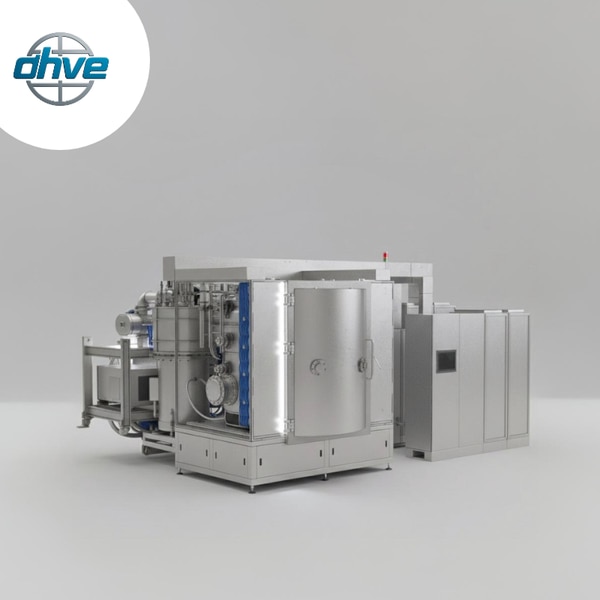
We are in the business of Vacuum Science and Technology for more than 40 years. We manufacture world class High Vacuum Metallizing Plants / Coating systems in different configurations like: - Horizontal Coating Plants - Vertical Double Door Coating Plants - Vertical Single Door Coating Plants - Box Type or Sheet Glass Coating Plants Metalizers for plastic, Ceramics and metals Gift items Coatings of diameter 54" X 52 Depth horizontal or customized. Coating units for statues, ladies sandal heals, fan monograms, vehicle monograms, wall Clock/Photo frame metallic coating plants. Gem/glass bids coating units. Indian and Imported Metalizing Plants

68179d65be22ee500d53ff54 Card 2

product image
VACUUM GAUGES

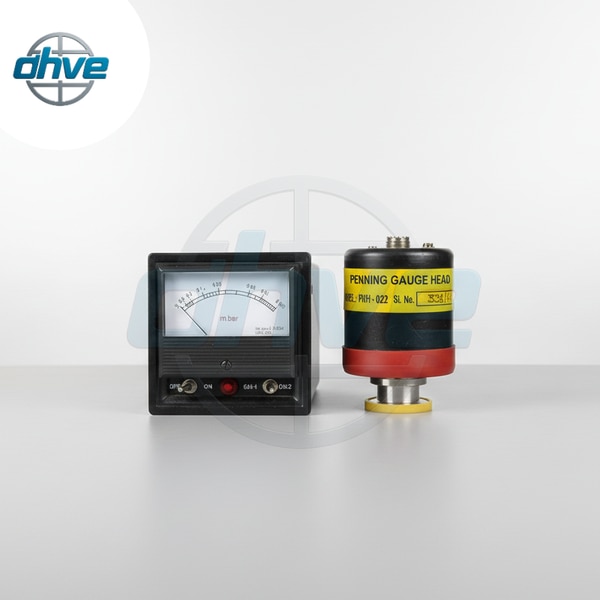
For rugged, reliable measurement in the high vacuum to ultra-high vacuum range (typically 10^{-2} to 10^{-9} mbar), the Analog Penning Gauge (also known as a Cold Cathode Gauge) is the industry's preferred workhorse. Unlike hot-cathode gauges that use delicate filaments, the Penning gauge is robust, resistant to sudden pressure bursts, and ideal for harsh industrial environments. Dinesh High Vacuum Engineering (DHVE) supplies high-quality Analog Penning Gauges designed to provide operators with immediate, clear visual feedback on deep vacuum levels without the complexity or fragility of other high-vacuum sensors. I. ⚙️ Principle of Operation: The Cold Cathode Discharge The Penning Gauge measures pressure through gas ionization. However, unlike 'hot' gauges that boil electrons off a filament, the Penning gauge uses a high voltage and a magnetic field to create a self-sustaining discharge at low pressures. How It Works The Cell Structure: The gauge head contains two electrodes: an anode (usually a central ring or rod) and a cathode (plates or a cylinder connected to ground). High Voltage: A high DC voltage (typically 2 to 3 kilovolts) is applied between the anode and cathode. This electric field accelerates any free electrons present in the chamber. The Magnetic Trap: A strong permanent magnet surrounds the gauge tube. This magnetic field forces the electrons to travel in long, spiraling helical paths rather than going straight to the anode. Ionization: Because the electrons travel such a long distance, their probability of colliding with gas molecules increases dramatically. These collisions knock electrons off gas molecules, creating positive ions. Current Measurement: The positive ions are attracted to the cathode, creating an electrical current. This discharge current is directly proportional to the gas density (pressure). The analog meter measures this current and displays it as a pressure reading. II. 📊 Why Choose an Analog Penning Gauge? While digital sensors are common, the Analog Penning Gauge from DHVE offers specific advantages that keep it relevant and highly valued in heavy industry: Extreme Robustness (No Filament): The 'Cold Cathode' design means there is no hot filament to burn out. This makes the gauge incredibly durable and immune to failure from vibration or accidental exposure to atmospheric pressure (air inrush), which would instantly destroy a hot-cathode gauge. Instant Visual Trend Monitoring: The analog needle movement allows operators to see the rate of pump-down or pressure fluctuations at a glance, often faster and more intuitively than watching jumping digits on a screen. Cost-Effective High Vacuum Sensing: Penning gauges are generally more affordable than Bayard-Alpert (hot cathode) gauges while covering a similar high-vacuum range. Low Maintenance: The sensing head is simple and can often be disassembled and cleaned (sandblasted or polished) to remove contaminants, extending its life indefinitely. III. 🌍 Essential Applications for DHVE Penning Gauges The rugged nature of the Penning Gauge makes it the standard choice for industrial high-vacuum equipment where reliability is key: Vacuum Furnaces: Monitoring deep vacuum levels during sintering, brazing, and annealing processes where heat and vibration are present. PVD Coating Systems: Ensuring the chamber reaches the base pressure (e.g., 10^{-5} or 10^{-6} mbar) before the coating process begins. Particle Accelerators & Physics: Providing reliable monitoring of beamlines and large vacuum vessels. Electron Microscopy: often used as a robust interlocking gauge to protect the column. Leak Detection: Used as a durable sensor to indicate when a system is tight enough to switch to a leak detector. IV. Limitations to Consider While robust, DHVE advises customers to be aware of the specific characteristics of Penning technology: Starting Delay: At very low pressures (below 10^{-6} mbar), the discharge may take a few seconds (or minutes in extreme cases) to 'ignite' because there are so few gas molecules to start the ionization chain. Accuracy: They are generally less accurate (typically pm 30 to 50) than hot-cathode gauges, which is usually acceptable for industrial 'go/no-go' monitoring but less so for precision research. Cleaning: Over time, carbon deposits (from hydrocarbon vapors) can build up on the cathode, requiring periodic cleaning to maintain sensitivity. Durability Meets Depth with DHVE For industrial applications where you need to measure down to 10^{-9} mbar without worrying about burning out a sensor every time someone opens a valve too fast, the Analog Penning Gauge is the answer. Dinesh High Vacuum Engineering (DHVE) ensures you get a gauge built for the toughest environments. ➡️ Equip your high vacuum systems with the most durable sensor on the market. Contact Dinesh High Vacuum Engineering today for a quote on our Analog Penning Gauges!

68179d65be22ee500d53ff54 Card 2

product image
DIFFUSION PUMP OIL

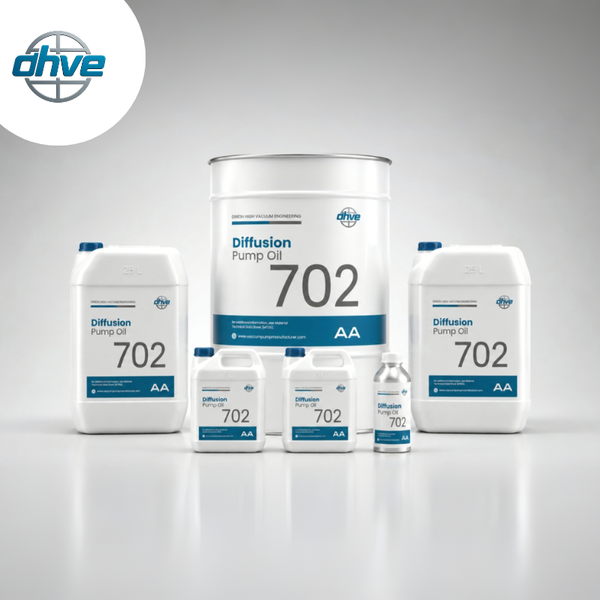
Dinesh High Vacuum Engineering DPO 702 Diffusion Pump Oil is developed for industries, laboratories and vacuum system users who need a dependable DC 702 equivalent diffusion pump oil in India. DPO 702 is suitable for diffusion pumps used in vacuum coating units, PVD systems, vacuum furnaces, metallurgy plants, research chambers, evaporation systems and industrial high-vacuum equipment. It is made for users who want a reliable replacement option for imported and national diffusion pump oils without compromising on practical performance requirements. This product is recommended for customers searching for DC 702 oil equivalent, Dow Corning 702 replacement, diffusion pump oil 702, high vacuum diffusion pump fluid, or vacuum oil for diffusion pump applications. ⁕ Suitable Replacement for DC 702 Type Applications : Many Indian users face difficulty with imported diffusion pump oil availability, high cost, long lead time and inconsistent supply. DPO 702 is offered as a practical DC 702 equivalent performance-grade diffusion pump oil for users who need a trusted replacement for DC 702 type applications. It can be considered for systems where DC 702 or similar 702-grade diffusion pump oil is recommended, subject to pump compatibility, process requirement and technical confirmation. For best accuracy, customers should compare the product technical data sheet, COA and operating requirements before replacement. 🛡️Key Performance Features & Benefits : -- Drop-In Compatibility : 100% equivalent to international standards like Dow Corning DC 702, ensuring identical vapor pressure curves and operational cycles. -- Rapid Pump-Down Cycles : Optimizes operational throughput by facilitating high pumping speeds for large-volume industrial vacuum chambers. -- Extended Fluid Longevity : Reduces maintenance overhead, frequency of oil replacements, and unplanned system downtime under grueling production pressures. ✅Recommended Applications : -- Vacuum Coating : Used in coating plants where diffusion pumps are required to create stable vacuum conditions for thin film deposition and industrial coating processes. -- PVD Coating Machines : Suitable for PVD coating units where clean and stable vacuum performance is important for production quality. -- Vacuum Furnaces : Can be used in vacuum furnace systems where diffusion pumps support deep vacuum conditions for heat treatment and metallurgical processes. -- Research Laboratories : Suitable for research chambers, experimental vacuum systems and laboratory high-vacuum equipment. -- Metallurgy and Heat Treatment : Useful in vacuum metallurgy, brazing, sintering, degassing and heat treatment operations. -- Industrial Vacuum Systems : Suitable for OEMs, service teams and industrial users maintaining diffusion pump-based vacuum equipment. 👌Where DPO 702 Can Be Used : - Oil diffusion pumps - High-vacuum chambers - Vapor booster systems - Vacuum coating plants - PVD coating systems - Vacuum furnace systems - Heat treatment plants - Metallurgical vacuum equipment - Research and development vacuum setups ———————————————————————————————————— Frequently Asked Questions : 1 ) Is DPO 702 equivalent to DC 702 diffusion pump oil? DPO 702 is offered as a DC 702 type equivalent performance-grade diffusion pump oil for users who need a practical replacement option for DC 702 applications. It is suitable for many diffusion pump systems where 702-grade oil is required, subject to pump compatibility and process conditions. Customers should compare the technical data sheet, certificate of analysis and equipment manual before replacing any existing oil. For critical research, coating or furnace applications, technical confirmation is recommended before switching from the original oil grade. 2 ) Can DPO 702 be used in PVD coating machines? Yes, DPO 702 can be used in diffusion pump systems connected to PVD coating machines, provided the oil grade is suitable for the pump model and process requirement. PVD coating systems usually require stable high-vacuum performance to support coating quality and process consistency. Before using DPO 702, the old oil should be drained properly and the pump should be inspected for contamination or carbon deposits. For best results, follow the pump manufacturer’s oil filling quantity, operating temperature and maintenance instructions. 3 ) Is DPO 702 suitable for vacuum furnace applications? DPO 702 is suitable for diffusion pumps used in vacuum furnace and heat treatment applications where a 702-grade diffusion pump oil is required. Vacuum furnaces often operate in demanding environments, so oil condition, pump cleanliness and cooling efficiency are important for stable performance. Before filling DPO 702, check the furnace vacuum system requirement and confirm compatibility with the existing diffusion pump. Regular oil inspection is recommended because contaminated or thermally degraded oil can reduce pump efficiency and affect the vacuum level. 4 ) How do I know when diffusion pump oil needs replacement? Diffusion pump oil may need replacement when pump-down time increases, ultimate vacuum becomes poor, the oil looks dark or thick, or contamination is visible inside the pump. Burnt smell, carbon deposits, frequent process contamination or unstable vacuum performance can also indicate oil degradation. In high-vacuum systems, oil quality directly affects pumping efficiency and chamber cleanliness. Regular inspection, proper cooling, correct heater operation and timely oil replacement help maintain stable diffusion pump performance and reduce the risk of downtime. ————————————————————————————————————

68179d65be22ee500d53ff54 Card 2

product image
DIFFUSION PUMP OIL

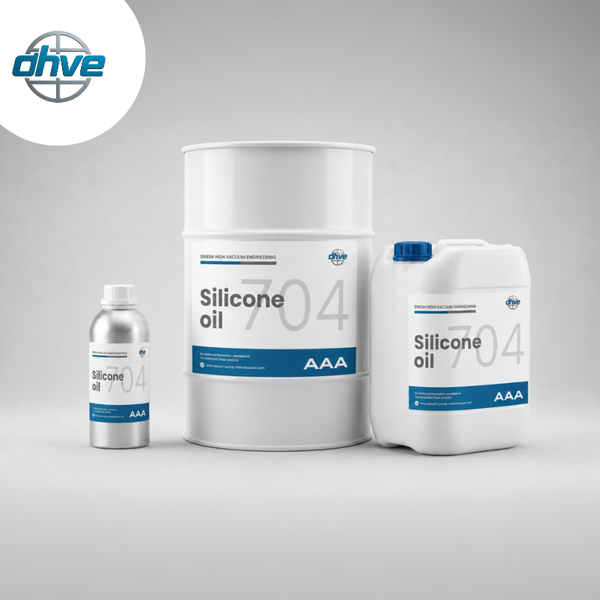
Dinesh High Vacuum Engineering DSO 704 is a premium-grade silicone diffusion pump oil designed for high-vacuum and ultra-clean vacuum applications. It is developed as a reliable DC 704 equivalent / Dow Corning DC 704 alternative for users who need stable performance, fast pump-down, low vapour pressure and dependable operation in diffusion pumps. DSO 704 is suitable for industries and laboratories using diffusion pumps in research systems, vacuum coating machines, PVD coaters, metallurgy, electron beam systems, high-vacuum furnaces, optical coating units and industrial vacuum chambers. It is specially made for customers looking for DC 704 diffusion pump oil in India, silicone oil 704, DOWSIL 704 equivalent, or a high-quality replacement for Dow Corning 704 diffusion pump fluid. ⁕ Why Choose DSO 704 Diffusion Pump Oil? DSO 704 is formulated for consistent high-vacuum performance where ordinary vacuum oils are not suitable. The DC 704 fluid class is known for high vacuum use, with typical vacuum performance in the 10⁻⁶ to 10⁻⁸ Torr untrapped range and 10⁻¹⁰ to 10⁻¹¹ Torr trapped range, depending on pump condition, system design, trap/baffle use, heating efficiency and maintenance. Unlike general rotary pump oil, diffusion pump oil works under high temperature inside the pump boiler and must have low volatility, good thermal stability and clean vapor behavior. DSO 704 is made for this purpose and is ideal for demanding vacuum environments where stable oil performance directly affects chamber cleanliness and final vacuum level. ✅Applications of DSO 704 Silicone Oil : -- Research & Laboratory Vacuum Systems : For high-vacuum research chambers, experimental setups, analytical instruments and scientific vacuum systems. -- PVD Coating & Vacuum Coating : Suitable for PVD coaters, optical coating machines, decorative coating units and thin-film deposition systems. -- Metallurgy & Heat Treatment : Useful in high-vacuum furnaces, degassing, sintering and refractory metal processing. -- Electronics & Semiconductor Support Systems : For vacuum systems used in electronics manufacturing, coating, drying and process chambers. -- Diffusion Pump Maintenance : Ideal when replacing old, contaminated or degraded diffusion pump oil in systems previously using DC 704 type oil. 🛡️DSO 704 vs DC 704 – Equivalent Performance for High Vacuum Use : DSO 704 is made for customers who require a DC 704 equivalent diffusion pump oil without compromising on vacuum performance. It is suitable for systems where Dow Corning DC 704, DOWSIL 704, or other 704-grade silicone diffusion pump fluids are recommended. It can be used in many diffusion pump systems after proper cleaning, draining and refilling as per pump manufacturer guidelines. For best results, always remove degraded oil, clean the boiler area, inspect heaters, check cooling water/airflow, and ensure the backing pump is working correctly before charging new diffusion pump oil. 👌When Should You Replace Diffusion Pump Oil? You should consider replacing your diffusion pump oil if you notice: - Slow pump-down time - Final vacuum level not reaching expected range - Oil discoloration or burnt smell - Excessive backstreaming - Contamination inside the vacuum chamber - Pump overheating or unstable operation - Oil has been exposed to air at operating temperature for too long Fresh DSO 704 oil can help restore performance when the old oil is contaminated, oxidized or thermally degraded.

68179d65be22ee500d53ff54 Card 2

product image
VACUUM PUMP OIL

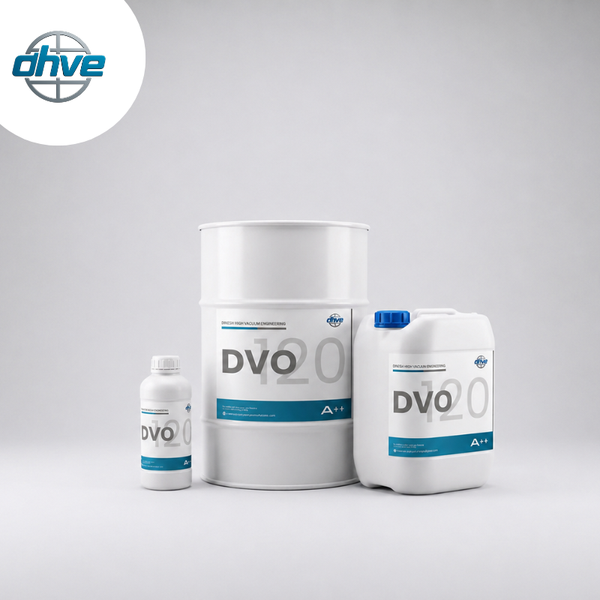
Operating high-speed, single-stage rotary vane vacuum systems demands an optimization fluid that balances rapid internal heat transfer with absolute structural stability. Dinesh High Vacuum Engineering’s DVO 120 is custom-compounded to meet this exact challenge. Engineered as a premium functional equivalent to Leybold LEYBONOL LVO 120, this specialized lubricant brings highly refined mineral bases and targeted performance enhancements into your production line. Unlike standard baseline oils, DVO 120 falls into the precise ISO VG 32 classification. This specific viscosity profile is selected by engineers to ensure rapid fluid circulation during crucial system startup phases while maintaining a resilient sealing film under continuous operating temperatures. 🛡️Key Features & Technical Benefits -- Overcoming Startup Electrical Overload : Thicker vacuum oils can create heavy viscous drag when a pump is activated cold, leading to tripped breakers and excessive motor wear. -- Active Oxidation Resistance : When exposed to compressed atmospheric gases and frictional heat, raw mineral oils quickly break down into dark, sticky varnishes. -- Accelerated Moisture Separation : Industrial processes frequently pull ambient humidity into the vacuum chamber. DVO 120 features advanced demulsifying properties that prevent water from permanently blending into the oil. ✅Equipment Application Guide : DVO 120 can be introduced directly into machinery requiring an additivated ISO VG 32 vacuum lubricant. It is a direct functional fit for: -- SOGEVAC Single-Stage Lines : Optimized for compact and mid-sized configurations, including the SV 10 B, SV 16, SV 25 B, and SV 65 pump variations. -- High-Speed Rotary Assemblies : Equipment designs requiring an anti-wear fortified mineral oil to protect internal components during constant start-stop cycles. -- Legacy Fleet Operations : An exact chemical drop-in choice for systems originally specified to run on older, discontinued Leybold HE200 fluid grades.

68179d65be22ee500d53ff54 Card 2

product image
VACUUM PUMP OIL

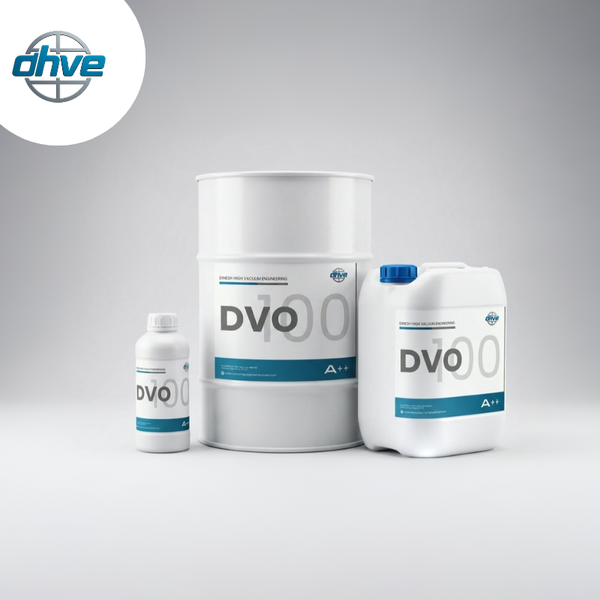
Dinesh High Vacuum Engineering’s DVO 100 is a premium-grade, highly refined mineral vacuum pump oil formulated without additives. Engineered specifically to serve as a direct, seamless replacement for Leybold LEYBONOL LVO 100, DVO 100 ensures your high-vacuum machinery maintains optimal ultimate pressure, minimal backstreaming, and reliable component protection without the OEM price premium. Whether you are operating high-capacity rotary vane pumps, roots blowers, or industrial diffusion setups, DVO 100 matches the exact physical, thermal, and chemical profile required to protect your internal components from premature wear and thermal breakdown. 🛡️Key Features & Technical Benefits : 1. Ultra-Low Vapor Pressure & Minimal Foaming DVO 100 undergoes strict distillation processing to eliminate low-boiling fraction volatiles. This achieves a remarkably low vapor pressure at high thermal thresholds, preventing vapor migration back into your clean vacuum chamber while maintaining the absolute lowest ultimate pressure capabilities of your pump series. 2. Additive-Free Formula for Chemically Inert Applications Designed completely free of aggressive chemical additives, DVO 100 will not react or break down prematurely when exposed to standard atmospheric air, water vapor, and chemically inert process gases (such as Nitrogen, Argon, and Helium). 3. Rapid Water Separation & Demulsibility Industrial vacuum applications regularly ingest moisture. DVO 100 features high demulsibility properties, meaning it separates water rapidly from the oil layer. This allows condensation to settle at the bottom of the oil reservoir for easy draining, rather than forming a milky emulsion that destroys lubricating efficiency. ✅Direct Pump Compatibility Guide : DVO 100 is engineered to be poured directly into systems utilizing LVO 100 without needing a complex chemical flush. It is fully compatible with the following equipment lines: -- Leybold TRIVAC Series : Compatible with TRIVAC A, TRIVAC B, and TRIVAC E rotary vane pumps. -- Leybold RUVAC Series : Roots vacuum pumps requiring un-additivated ISO VG 100 lubrication. -- Leybold E + DK Series : Rotary piston pump systems running under constant industrial loads. -- Standard Rotary Vane & Piston Pumps : Any industrial high-vacuum pump specifying a non-detergent, additive-free ISO VG 100 vacuum oil. 👌Applications of DVO 100 Vacuum Pump Oil : -- Rotary vane vacuum pumps, High vacuum systems -- Vacuum coating machines, PVD and thin film deposition systems, Vacuum metallurgy -- Vacuum drying chambers, Laboratory vacuum systems -- Research and development facilities, Pharmaceutical vacuum systems -- Freeze drying and lyophilization systems, Transformer oil filtration plants

Still searching for
pirani vacuum gauge calibration india?