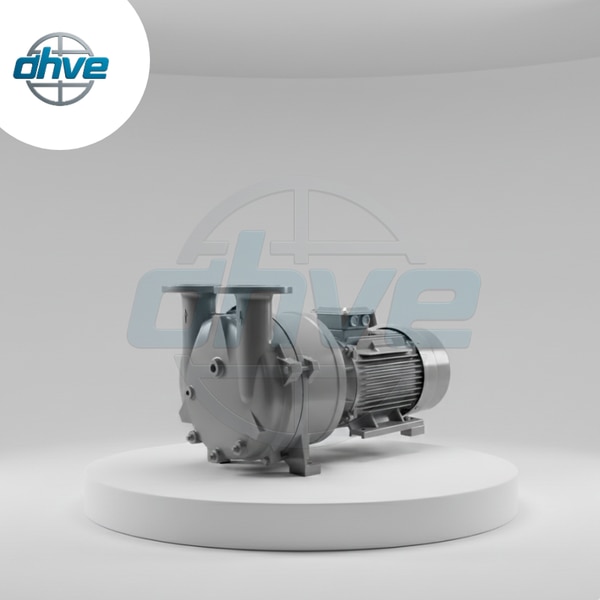
Liquid Ring Vacuum Pumps In the chemical, pharmaceutical, power, and food industries, vacuum processes often involve high volumes of condensable vapors, wet gases, or corrosive media. These challenging environments can quickly degrade and destroy traditional dry or oil-sealed pumps. The solution is the exceptionally robust and highly tolerant Liquid Ring Vacuum Pump (LRVP). Dinesh High Vacuum Engineering (DHVE) specializes in LRVPs, leveraging the unique properties of a rotating liquid seal to create a vacuum while simultaneously condensing vapors and scrubbing particulates. The result is a simple, durable, and highly reliable pump that is a cornerstone of process vacuum technology globally. I. ⚙️ The Liquid Ring Principle: Sealing with Fluid The Liquid Ring Vacuum Pump is a type of positive displacement pump that uses an internal sealing liquid (typically water, but often process-compatible solvents or oils) as the compressing element. The Simple, Robust Mechanism Eccentric Impeller: The pump features a multi-bladed impeller mounted eccentrically (off-center) within a cylindrical pump casing. The Liquid Ring: As the impeller rotates, the sealing liquid is thrown outward by centrifugal force, forming a rotating, concentric ring along the inner wall of the casing. This rotating liquid ring is the 'piston' that creates the vacuum. Gas Trapping and Compression: Because the impeller is mounted eccentrically, the space between the impeller blades and the inner surface of the liquid ring continually changes volume: Suction: As the impeller rotates away from the casing center, the chambers between the blades and the liquid ring increase in volume, drawing process gas through the inlet port. Compression: As rotation continues, the liquid ring moves inward toward the impeller hub, reducing the volume of the trapped gas chambers and compressing the gas (isothermal compression). Discharge: The compressed gas, along with a portion of the sealing liquid, is expelled through the discharge port. An external separator system captures the liquid for cooling and potential recirculation (partial or full recovery systems). II. 🌟 Superior Advantages of DHVE Liquid Ring Pumps The unique use of a liquid seal provides a distinct set of operational benefits that make the LRVP essential for difficult industrial duties: Exceptional Contaminant and Vapor Handling: The ability to handle high liquid carryover, condensable vapors, and even soft solids without damage is the defining advantage. The sealing liquid washes the pump's internals, preventing fouling and corrosion. Isothermal Compression: The continuous presence of cool sealing liquid absorbs the heat generated during gas compression. This results in an isothermal (constant temperature) process, which is safer for handling heat-sensitive and potentially flammable gases. Rugged Reliability & Durability: With only one moving part—the impeller—and no metal-to-metal contact between the impeller and the casing, the DHVE LRVP experiences minimal wear. This translates to exceptional operational uptime and significantly lower maintenance costs. Versatility in Sealing Fluids: The sealing liquid is often chosen to be compatible with the process gas. DHVE can configure systems to use water, mineral oil, or specific organic solvents, allowing the LRVP to be used for gas scrubbing and recovery simultaneously. Single- and Two-Stage Options: DHVE offers both single-stage pumps (for rough vacuum, down to approx. 35 mbar) and two-stage pumps (for deeper vacuum, typically down to 25 mbar), providing tailored performance for your specific pressure requirements. III. Designing Your DHVE LRVP System Selecting the correct LRVP system goes beyond just the pump. Dinesh High Vacuum Engineering provides complete systems that include: Material Construction: Pumps are available in Cast Iron (CI), Stainless Steel (SS 304/316), and specialized alloys to ensure compatibility with highly corrosive media. Seal Liquid Management: Choosing between Once-Through (single-pass), Partial Recirculation, or Full Recirculation (Closed-Loop) systems is vital for water conservation, heat dissipation, and environmental compliance. DHVE designs recirculation systems with heat exchangers and liquid separators for maximum efficiency. Performance Range: Single-stage pumps are ideal for applications near the saturation point of the sealing liquid, while two-stage systems offer better performance at deeper vacuum levels. Partner with Dinesh High Vacuum Engineering for Industrial Process Vacuum The Liquid Ring Vacuum Pump is the most reliable choice when facing dirty, wet, or corrosive process streams. Trust Dinesh High Vacuum Engineering (DHVE) to supply an expertly designed system that guarantees longevity, safety, and consistent performance, minimizing your environmental impact and maintenance budget. ➡️ Contact Dinesh High Vacuum Engineering today to configure a high-durability Liquid Ring Vacuum Pump system tailored precisely to your industrial process environment!

New Delhi
08048046662
+919818085534
 Chat with us
 Chat with us